Physical Identity Layer
Establishes a stronger basis for associating a physical asset, component, or system with its digital identity and relevant trust context. The goal is to make identity claims more durable across physical-digital boundaries.
Provenia's PASS Key is being developed as a hardware-rooted trust anchor designed to connect physical identity, authority, provenance, and trust-state continuity across distributed physical and digital systems.
The PASS Key is intended to strengthen the connection between the asset, its identity, its operating authority, and the trust-relevant history surrounding it. The design priorities below reflect how that trust foundation is being developed.
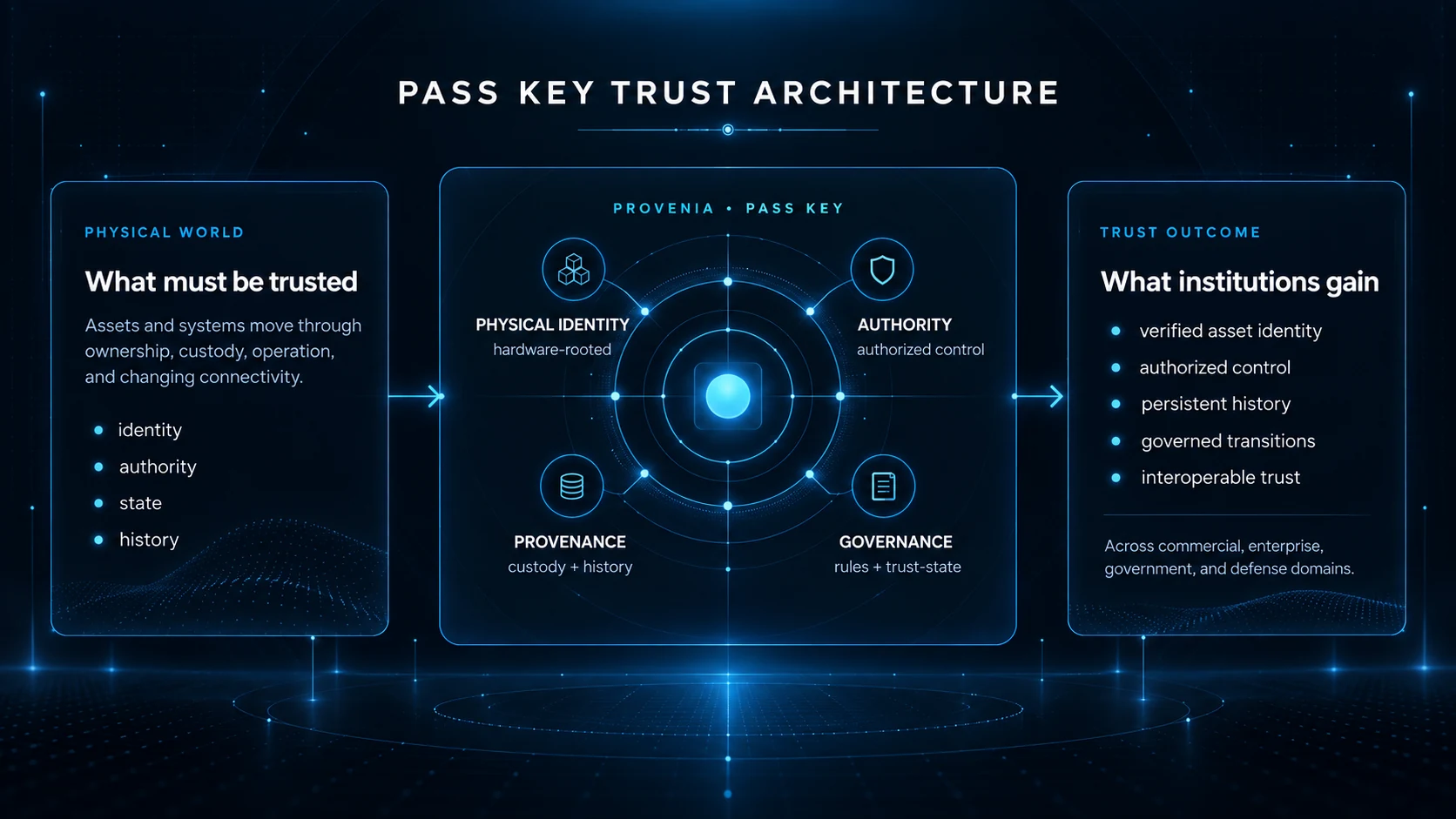
The platform is being developed around five design priorities that shape how trust is established, evaluated, and preserved without assuming continuous connectivity or centralized supervision.
Anchor trust-relevant signals as close as practical to the physical system or asset.
Strengthen confidence that physical and digital identities remain meaningfully linked.
Evaluate whether an action, instruction, or operating state is associated with appropriate authority.
Track trust-relevant state as systems move through changing conditions and modes of operation.
Preserve and reconcile trust-relevant context through degraded, disconnected, or intermittent operating periods.
Each area addresses a different part of the trust problem while contributing to a common operating model.
Establishes a stronger basis for associating a physical asset, component, or system with its digital identity and relevant trust context. The goal is to make identity claims more durable across physical-digital boundaries.
Maintains trust-relevant state as operating conditions change. This supports systems that need to retain context through disconnected, degraded, or intermittently supervised periods.
Supports accountable relationships between identity, permission, instruction, and action. It is designed to help systems evaluate whether authority remains valid as control becomes distributed.
Extends trust concepts into degraded or disrupted environments so systems can continue operating with bounded confidence and later reconcile state when conditions improve.